Someone in your corner.
Let a partner, friend or parent see how you’re doing — only what you choose to share, and you can stop any time. They use Trace for free.
How Together works →Understand your ADHD. Log how your day really went in seconds, see what shows up on your good and hard days, and walk into appointments with your notes ready.
Private by design. Kind by default.
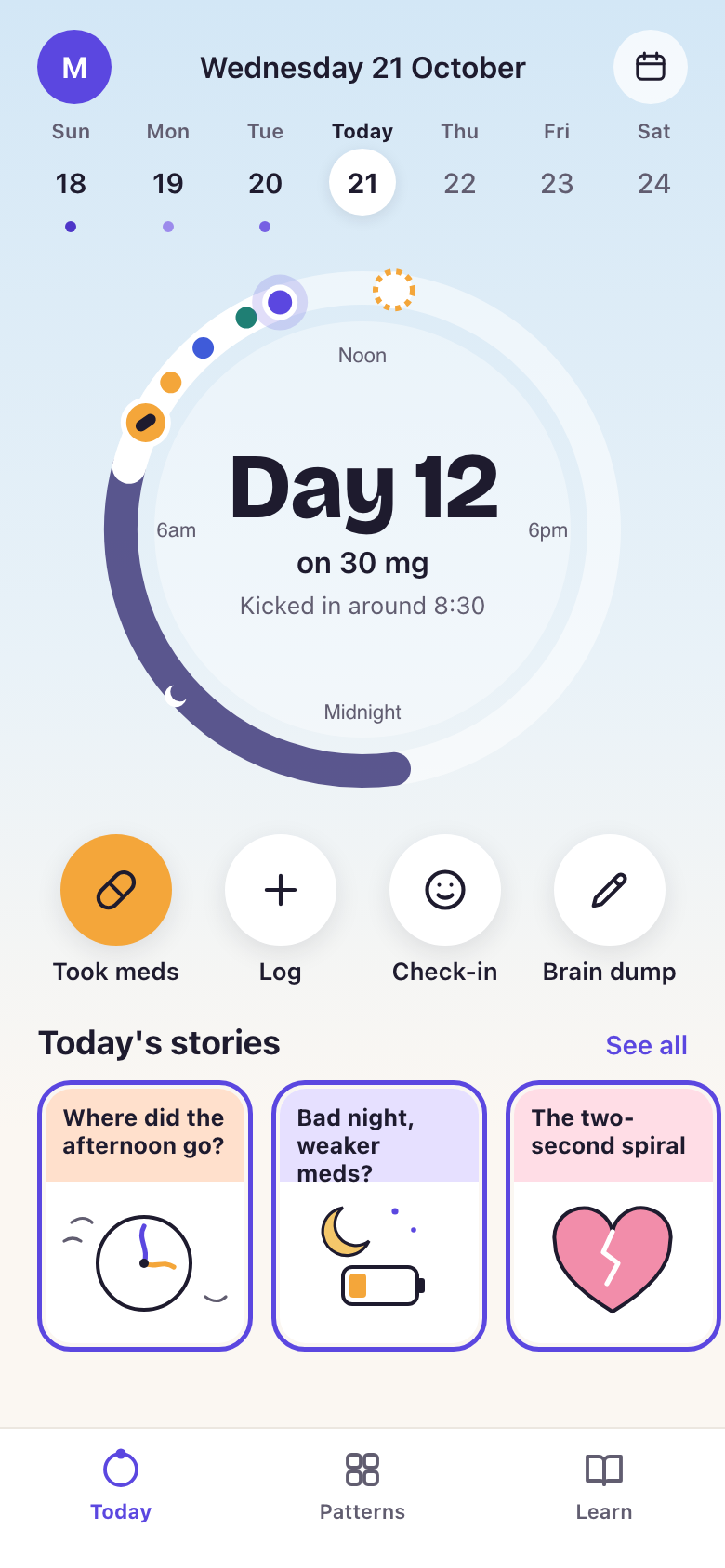
One tap when you take your meds. Two taps to say how the day went. A win, a note or a brain dump whenever you want one.
Or without opening Trace: from your Lock Screen, a widget, Siri, the Action Button or Quick Settings.
Not a planner. Not a coach. A diary that notices them with you.
Trace lines up what you logged with how your days went, in plain words. Like: on 9 of your 13 good days, you’d gotten outside.
Patterns show what came alongside your days, not why. They’re yours to make sense of.
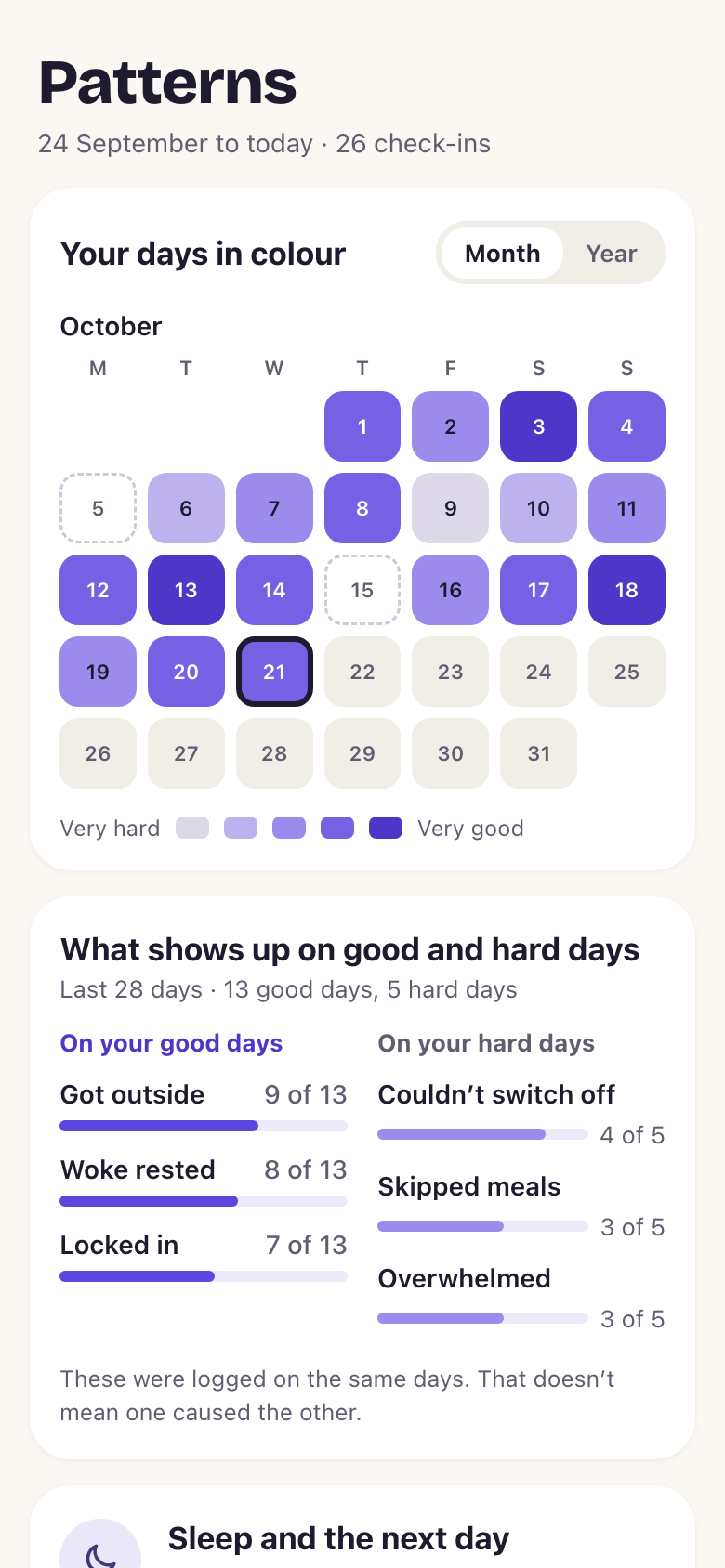
Example report with made-up entries.
Turn your diary into a short report to print, share or show on your phone. Or send your clinician a link that opens in any browser and stops working when you say.
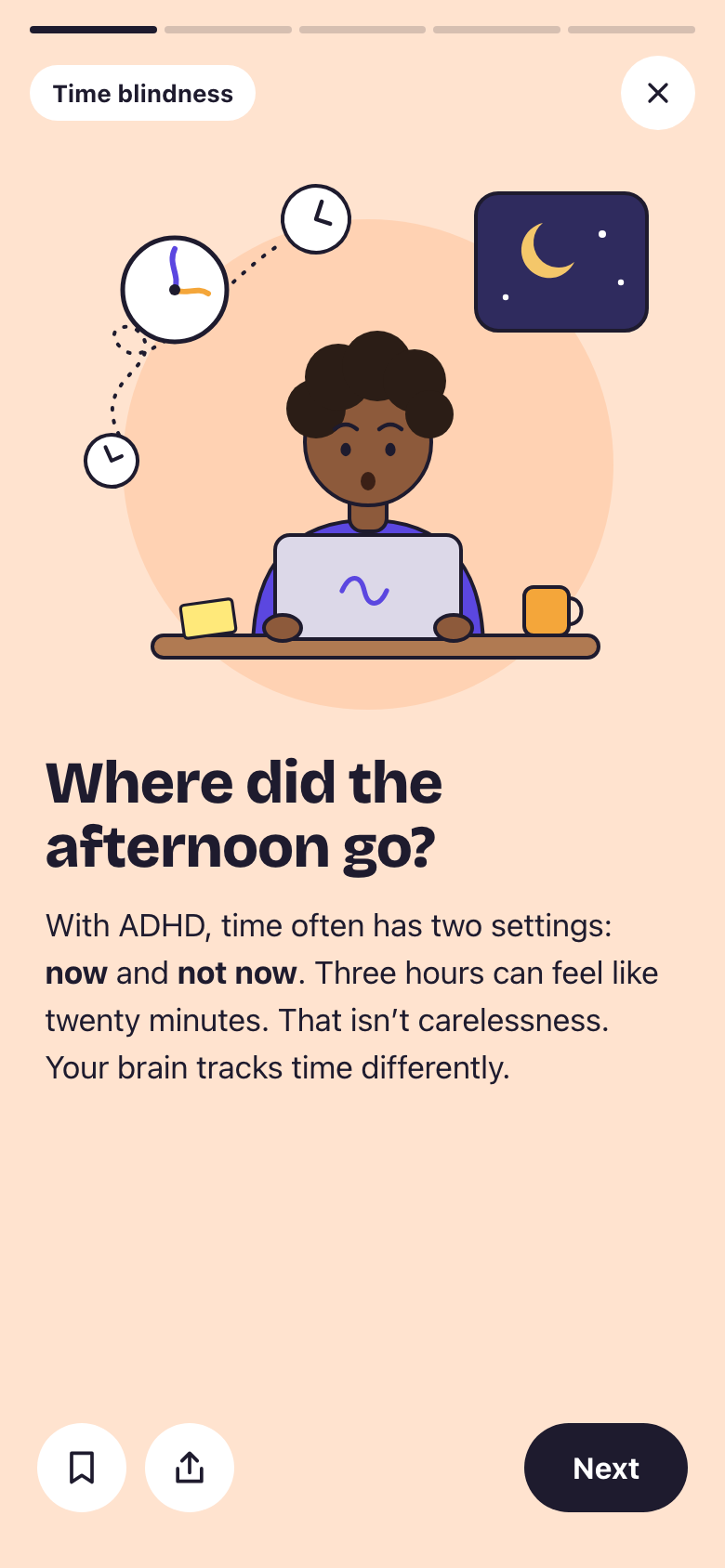
What clinicians see →Short reads on time blindness, doom piles, the two-second spiral and more, with links to where the facts come from.
Let a partner, friend or parent see how you’re doing — only what you choose to share, and you can stop any time. They use Trace for free.
How Together works →Waiting for an evaluation? Ask a parent, sibling or old friend what they remember. They write it in their browser, and it comes back to your phone.
How asking works →There’s nothing to sign up for. Trace works from the moment you open it.
Your diary is kept in an encrypted database on your phone, with a key that never leaves it.
Together, report links and invites are end-to-end encrypted. We pass them on, but we can’t read them.
There’s nothing to catch up on. Trace never counts what you didn’t do, and it’s glad you’re back.
Prices are shown in the App Store and Google Play.
Example screens with made-up entries.